



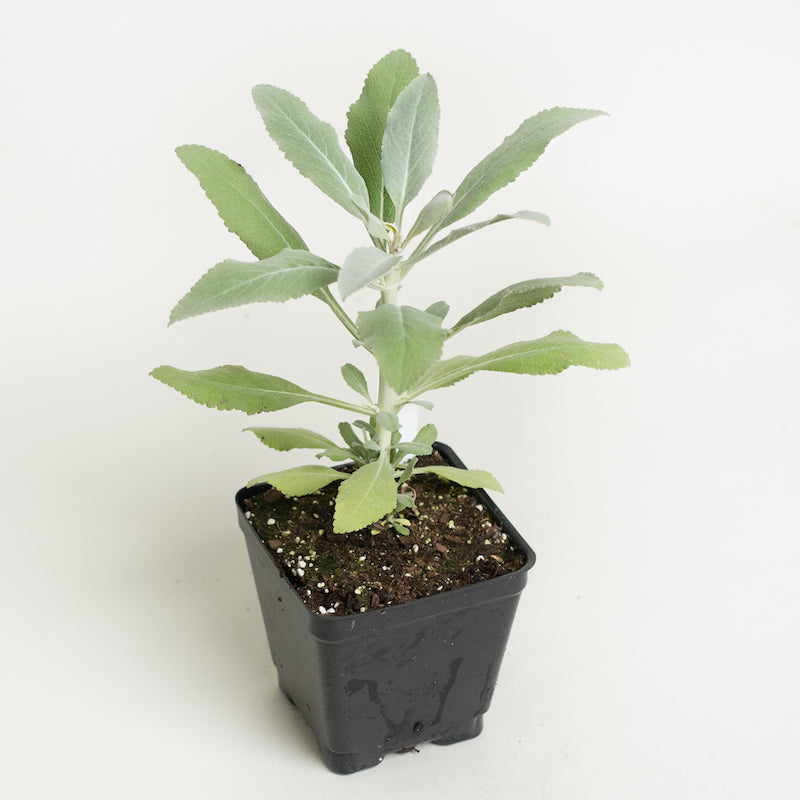
Sage 'White'
Sage 'White'



-
 Medicinal
-
 Deer Resistant
-
 Aroma
Aroma
-
 Pollinator
-
 Indoor
-
 Native
 Deer Resistant
 Native
Couldn't load pickup availability
-
White Sage Plants For Sale
Salvia apiana
Salvia apiana, more commonly known as White Sage, is a hardy evergreen perennial shrub native to the Southwest United States and Northwest Mexico. This resilient plant thrives from late April to June, and its aromatic leaves can be harvested in summer or fall when the white-leaved rosettes are at their peak.
Easy to grow and care for, White Sage is one of the many herbs offered by The Growers Exchange. Read on to learn more about this incredible plant, and place your order through our online store.
What Is White Sage?
White Sage, also known as Bee Sage for its unique ability to attract pollinators, is a popular desert native plant, valued for its highly aromatic foliage and significant cultural history. When bruised, the leaves release a strong sage fragrance, and the dried leaves are traditionally used as incense in Native American ceremonies.
White Sage Appearance and Characteristics
White Sage produces stunning white flower spikes in the spring with tiny lavender spots, sometimes reaching up to 6 feet tall. Each spike can hold up to 100 blossoms and is favored by hummingbirds, carpenter bees, and bumblebees. White Sage also makes a beautiful addition to water-wise gardens and is especially striking under moonlight or night lighting.
White Sage Origins and History
Originating from the Southwestern United States and Northwestern Mexico, White Sage is a sacred herb, particularly important to the Chumash, a Native American tribe. Called "Wey’Wey," its leaves are traditionally burned in ceremonies to cleanse the spirit, calm the senses, and invite divine healing during prayer.
White Sage Plant Care: Growing Tips
White Sage isn’t the easiest sage to grow, but here’s a short guide to help you get started:
Sunlight
White Sage requires at least 6 to 8 hours of direct sunlight daily. It thrives in full sun, especially in hot, dry climates.
Soil
Good drainage is essential for White Sage. Use a sandy, rocky mix to prevent waterlogging. For potted plants, mix one-third sand into the soil to promote drainage and keep the roots healthy.
Watering
White Sage loves dry conditions. Keep the soil slightly moist, but avoid waterlogging. Let it dry out between waterings, though never allow it to become completely dry.
Temperature
White Sage thrives in heat but can’t handle frost. Its sweet spot is a daytime temperature of 70°F to 85°F. In cooler climates, grow it in a container that can be moved indoors during colder months.
Potting
If you're growing White Sage in a container, choose one at least one-third larger than the plant’s root ball. Over time, you’ll need a wide pot (at least 25 liters) to give it room to grow. Add a drainage layer of small stones or clay shards at the bottom to prevent root rot.
Fertilizing
Apply a liquid fertilizer for potted plants every two months during the growing season. Avoid over-fertilizing, as it can affect the plant's aromatic qualities.
Pruning
Prune in early spring to encourage bushy growth. Prune again after the first flowering to promote a second bloom, and give it a final light trim in mid-August.
Uses and Benefits of White Sage
Truly a plant of all trades, White Sage has been cherished for its diverse uses. Here’s how you can make the most of this herb:
-
Ceremonial Uses: White Sage has been used for centuries in purification rituals. Native Americans burn the dried leaves as incense or in smudging sticks. Its aromatic smoke is thought to purify areas, objects, and people of evil spirits and negative energy.
-
Aromatherapy: The soothing scent of White Sage is widely used in aromatherapy to clear the mind, reduce stress, and promote relaxation. Its natural compounds, including eucalyptol, offer a minty, cooling effect that sharpens mental clarity.
-
Nutritional and Medicinal Value: White Sage is rich in essential oils with antibacterial and antifungal properties. Traditionally, it has been brewed into teas to soothe stomach discomfort and sore throats. The leaves can also be crushed as a topical ointment on skin irritations or chewed to provide hydration and freshen breath.
How to Make a White Sage Cleansing Stick
One of the most beloved uses of White Sage is making your cleaning stick for purification and rituals. Be sure to use White Sage or another safe herb, as some plants can be toxic or may not burn well.
Here’s how you can easily make one at home:
-
Harvesting: On a dry, sunny morning, gather large, healthy leaves. Try to pick similarly sized leaves for a nice, even bundle. The bigger the leaves, the better!
-
Bundling: Gather the leaves in a tight bundle. Tie a sturdy knot around the base, leaving a long tail of string for later.
-
Wrapping: Use a natural twine like an embroidery thread, which burns easily. Wrap the bundle from the bottom to the top and back down in a zig-zag pattern.
-
Finishing: Wind the string around the top of the bundle and leave another long “tail” at the opposite end. Tie the two tails together to create a handle.
-
Drying: Hang your cleansing stick in a dry, dark space until it’s fully dried and ready to use.
For more information on the uses and benefits of White Sage, get in touch with our plant experts. We’re always happy to help and guide you!
Shop Now for High-Quality White Sage Plants
White Sage is a plant with deep cultural roots and many practical uses. Whether you add it to your garden for spiritual purposes, medicinal benefits, or its distinctive beauty, White Sage offers many benefits for you to enjoy.
At The Growers Exchange, we provide high-quality, sustainably grown White Sage plants. Browse our selection and order online today!
-
-
-
White Sage Plants For Sale
Salvia apiana
Salvia apiana, more commonly known as White Sage, is a hardy evergreen perennial shrub native to the Southwest United States and Northwest Mexico. This resilient plant thrives from late April to June, and its aromatic leaves can be harvested in summer or fall when the white-leaved rosettes are at their peak.
Easy to grow and care for, White Sage is one of the many herbs offered by The Growers Exchange. Read on to learn more about this incredible plant, and place your order through our online store.
What Is White Sage?
White Sage, also known as Bee Sage for its unique ability to attract pollinators, is a popular desert native plant, valued for its highly aromatic foliage and significant cultural history. When bruised, the leaves release a strong sage fragrance, and the dried leaves are traditionally used as incense in Native American ceremonies.
White Sage Appearance and Characteristics
White Sage produces stunning white flower spikes in the spring with tiny lavender spots, sometimes reaching up to 6 feet tall. Each spike can hold up to 100 blossoms and is favored by hummingbirds, carpenter bees, and bumblebees. White Sage also makes a beautiful addition to water-wise gardens and is especially striking under moonlight or night lighting.
White Sage Origins and History
Originating from the Southwestern United States and Northwestern Mexico, White Sage is a sacred herb, particularly important to the Chumash, a Native American tribe. Called "Wey’Wey," its leaves are traditionally burned in ceremonies to cleanse the spirit, calm the senses, and invite divine healing during prayer.
White Sage Plant Care: Growing Tips
White Sage isn’t the easiest sage to grow, but here’s a short guide to help you get started:
Sunlight
White Sage requires at least 6 to 8 hours of direct sunlight daily. It thrives in full sun, especially in hot, dry climates.
Soil
Good drainage is essential for White Sage. Use a sandy, rocky mix to prevent waterlogging. For potted plants, mix one-third sand into the soil to promote drainage and keep the roots healthy.
Watering
White Sage loves dry conditions. Keep the soil slightly moist, but avoid waterlogging. Let it dry out between waterings, though never allow it to become completely dry.
Temperature
White Sage thrives in heat but can’t handle frost. Its sweet spot is a daytime temperature of 70°F to 85°F. In cooler climates, grow it in a container that can be moved indoors during colder months.
Potting
If you're growing White Sage in a container, choose one at least one-third larger than the plant’s root ball. Over time, you’ll need a wide pot (at least 25 liters) to give it room to grow. Add a drainage layer of small stones or clay shards at the bottom to prevent root rot.
Fertilizing
Apply a liquid fertilizer for potted plants every two months during the growing season. Avoid over-fertilizing, as it can affect the plant's aromatic qualities.
Pruning
Prune in early spring to encourage bushy growth. Prune again after the first flowering to promote a second bloom, and give it a final light trim in mid-August.
Uses and Benefits of White Sage
Truly a plant of all trades, White Sage has been cherished for its diverse uses. Here’s how you can make the most of this herb:
-
Ceremonial Uses: White Sage has been used for centuries in purification rituals. Native Americans burn the dried leaves as incense or in smudging sticks. Its aromatic smoke is thought to purify areas, objects, and people of evil spirits and negative energy.
-
Aromatherapy: The soothing scent of White Sage is widely used in aromatherapy to clear the mind, reduce stress, and promote relaxation. Its natural compounds, including eucalyptol, offer a minty, cooling effect that sharpens mental clarity.
-
Nutritional and Medicinal Value: White Sage is rich in essential oils with antibacterial and antifungal properties. Traditionally, it has been brewed into teas to soothe stomach discomfort and sore throats. The leaves can also be crushed as a topical ointment on skin irritations or chewed to provide hydration and freshen breath.
How to Make a White Sage Cleansing Stick
One of the most beloved uses of White Sage is making your cleaning stick for purification and rituals. Be sure to use White Sage or another safe herb, as some plants can be toxic or may not burn well.
Here’s how you can easily make one at home:
-
Harvesting: On a dry, sunny morning, gather large, healthy leaves. Try to pick similarly sized leaves for a nice, even bundle. The bigger the leaves, the better!
-
Bundling: Gather the leaves in a tight bundle. Tie a sturdy knot around the base, leaving a long tail of string for later.
-
Wrapping: Use a natural twine like an embroidery thread, which burns easily. Wrap the bundle from the bottom to the top and back down in a zig-zag pattern.
-
Finishing: Wind the string around the top of the bundle and leave another long “tail” at the opposite end. Tie the two tails together to create a handle.
-
Drying: Hang your cleansing stick in a dry, dark space until it’s fully dried and ready to use.
For more information on the uses and benefits of White Sage, get in touch with our plant experts. We’re always happy to help and guide you!
Shop Now for High-Quality White Sage Plants
White Sage is a plant with deep cultural roots and many practical uses. Whether you add it to your garden for spiritual purposes, medicinal benefits, or its distinctive beauty, White Sage offers many benefits for you to enjoy.
At The Growers Exchange, we provide high-quality, sustainably grown White Sage plants. Browse our selection and order online today!

What’s included
Included items will appear here once configured.