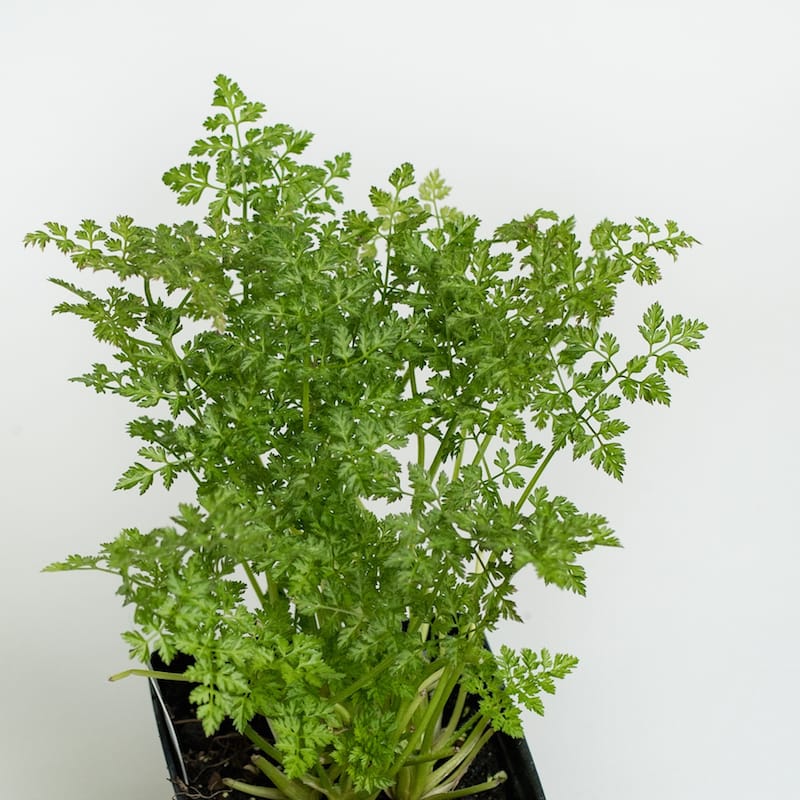
Chervil
Chervil
Quick Growing Facts
- Culinary
- Aroma
- Container
- Pollinator
- Indoor
Couldn't load pickup availability
Chervil Plants
Anthriscus cerefolium
Bring a French kitchen favorite to your herb garden. Chervil’s delicate, fern-like leaves offer a mild anise flavor that complements eggs, fish, vegetables, and creamy sauces without overwhelming them.
Best grown during cooler weather, this leafy herb is a useful choice for spring and fall gardens. Its soft green foliage also adds a light, airy texture to containers and herb beds.
A Delicate Finishing Herb
Use freshly chopped chervil to finish omelets, salads, soups, and potatoes. Add it near the end of cooking or just before serving to preserve its subtle flavor.
Chervil is one of the four herbs in the traditional French blend fines herbes, alongside parsley, chives, and tarragon. Combine small amounts of these fresh herbs for a fragrant finishing touch.
Growing Chervil
- Season: Grow as a cool-season annual. Hot weather encourages flowering, also called bolting, and shortens the leafy harvest.
- Light: Choose light or partial shade, especially as temperatures rise. More sun can be suitable during cool weather.
- Soil: Plant in fertile, well-drained soil that retains moisture.
- Water: Keep the soil consistently moist without leaving it waterlogged. Avoid allowing the root ball to dry out completely.
- Transplanting: Handle the roots gently and keep the root ball intact when moving your plant into its growing position.
- Containers: Use a container with drainage holes and enough depth for root development. Check moisture regularly.
Harvest Fresh Leaves as Needed
Once your plant is established, snip small amounts of leafy growth for the kitchen, leaving healthy foliage to support continued growth. Harvest regularly before flowering for the best leafy crop.
Shade and steady moisture can help delay bolting, but chervil is not a dependable leafy herb through prolonged summer heat. Plan your harvest around the cooler part of your growing season.
Explore our parsley plants for another kitchen favorite. For help settling in new plants, follow our arrival and planting guide.