


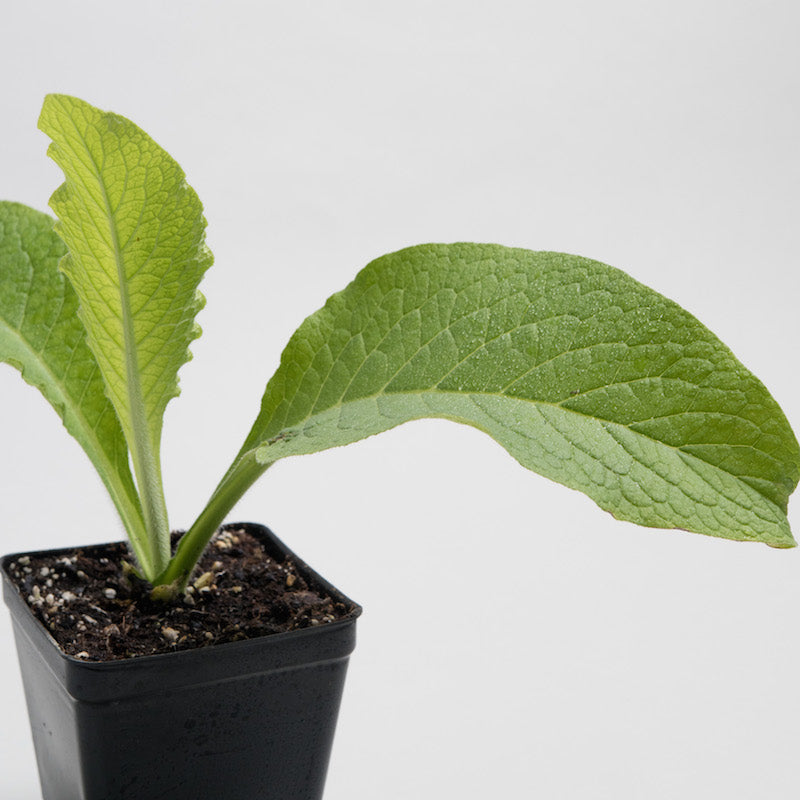
Comfrey 'Common'
Comfrey 'Common'


-
 Medicinal
-
 Pollinator
Couldn't load pickup availability
-
Comfrey Plants For Sale
Symphytum officinale
Herb Growing Tips
Light: Full Sun
Temperature: Perennial for zones 3-9
Watering: Comfrey needs an average amount of water and prefers to stay consistently moist but not waterlogged. Do not allow it to dry out between watering.
Soil: Needs moist soil that drains well so that the roots do not stay wet and begin to rot.
Comments: Comfrey is a highly useful herb for the organic gardener! The plants grow quickly and produce four to five pounds of cut foliage per plant, which is very rich in mineral content. This foliage decomposes quickly and makes a highly effective, all natural liquid fertilizer. You can also add the leaves themselves to your compost pile to aide in breaking down other organic matter, which will give you a much richer compost mix.
Herb Description
Comfrey is one of our most popular medicinal herbs. Common Comfrey is also referred to as ‘Knitbone’ as it is the plant's high concentration of Allantoin that helps reduce inflammation of sprains and broken bones. When mashed and heated into a poultice or applied as a salve, Comfrey can also make a wonderfully mild astringent great for ulcers and sores. The plant's natural Allantoin levels also make it a great herb for after sun care. Just steep fresh comfrey into a tea for external use, by straining the leaves and letting it cool. You can then soak the sunburned areas in the cooled tea to help reduce pain and discomfort, and promote healthy skin regeneration.
Comfrey enjoys a wet, shady area and will do well in most soil types. Though it makes a beautiful addition to the garden, it can sometimes be bothersome to get rid of, as new shoots grow easily from pieces of severed roots.
More recently, Comfrey has been the subject of a hot new composting trend. Because the plant yields large amounts of leaves, breaks down quickly and contains natural compost activators, you can create a compost tea from comfrey for fertilizing your plants. To learn how to make your own comfrey compost tea and how it benefits your garden, read our blog, Comfrey: Your Compost Companion.
** Please note: Comfrey should not be taken internally as, even in small doses over time, it can be harmful.
Comfrey Plants For Sale
Symphytum officinale
Herb Growing Tips
Light: Full Sun
Temperature: Perennial for zones 3-9
Watering: Comfrey needs an average amount of water and prefers to stay consistently moist but not waterlogged. Do not allow it to dry out between watering.
Soil: Needs moist soil that drains well so that the roots do not stay wet and begin to rot.
Comments: Comfrey is a highly useful herb for the organic gardener! The plants grow quickly and produce four to five pounds of cut foliage per plant, which is very rich in mineral content. This foliage decomposes quickly and makes a highly effective, all natural liquid fertilizer. You can also add the leaves themselves to your compost pile to aide in breaking down other organic matter, which will give you a much richer compost mix.
Herb Description
Comfrey is one of our most popular medicinal herbs. Common Comfrey is also referred to as ‘Knitbone’ as it is the plant's high concentration of Allantoin that helps reduce inflammation of sprains and broken bones. When mashed and heated into a poultice or applied as a salve, Comfrey can also make a wonderfully mild astringent great for ulcers and sores. The plant's natural Allantoin levels also make it a great herb for after sun care. Just steep fresh comfrey into a tea for external use, by straining the leaves and letting it cool. You can then soak the sunburned areas in the cooled tea to help reduce pain and discomfort, and promote healthy skin regeneration.
Comfrey enjoys a wet, shady area and will do well in most soil types. Though it makes a beautiful addition to the garden, it can sometimes be bothersome to get rid of, as new shoots grow easily from pieces of severed roots.
More recently, Comfrey has been the subject of a hot new composting trend. Because the plant yields large amounts of leaves, breaks down quickly and contains natural compost activators, you can create a compost tea from comfrey for fertilizing your plants. To learn how to make your own comfrey compost tea and how it benefits your garden, read our blog, Comfrey: Your Compost Companion.
** Please note: Comfrey should not be taken internally as, even in small doses over time, it can be harmful.

What’s included
Included items will appear here once configured.