


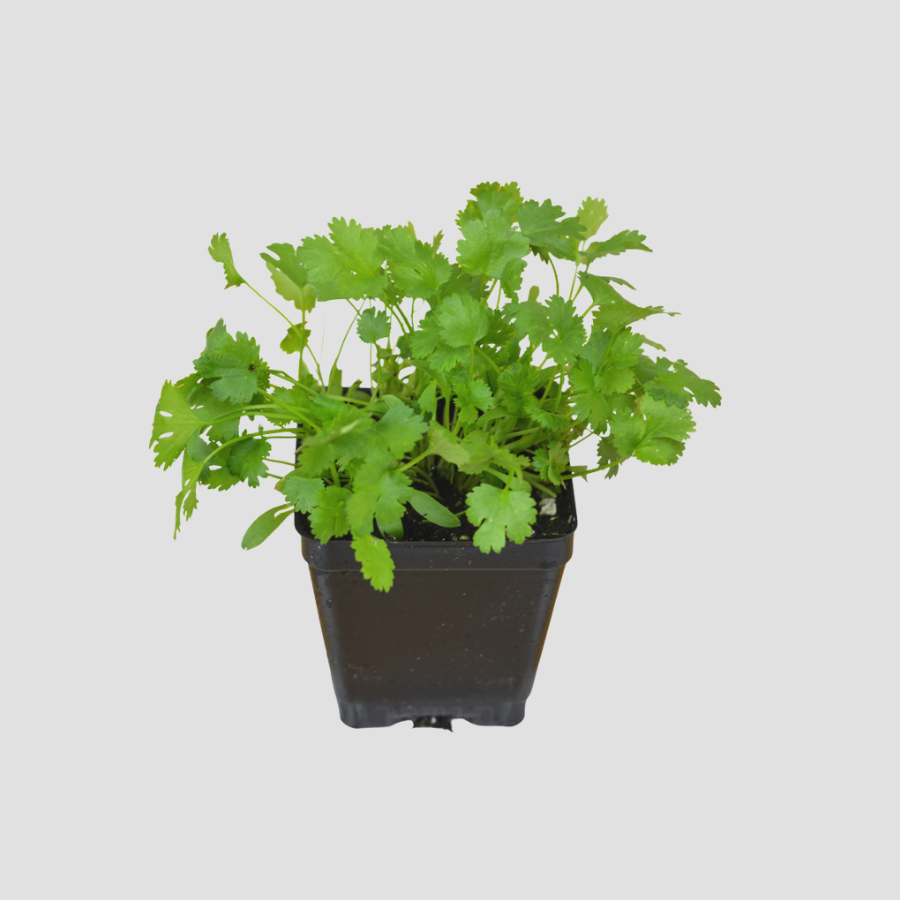
Cilantro
Cilantro


-
 Culinary
-
 Medicinal
-
 Container
-
 Indoor
Couldn't load pickup availability
-
Cilantro Plants For Sale
Coriandrum sativum
Herb Growing Tips
Light: Full Sun/ Part Shade
Temperature: Annual
Watering: moist soil, but avoid constant 'wet feet.'!
Soil: Well drain soil
Comments: The plant that keeps giving...continuous harvesting will allow the plant producing new growth!
Herb Description
Cilantro is a classic Mexican herb and an important addition to herb gardening for every chef. The foliage is called 'Cilantro' while the seed is called 'Coriander'. A popular culinary herb in Asian and Mexican cuisine, Cilantro is a very versatile herb to grow but bolts quickly in the heat. Planting in partial shade or by succession planting is the best way to make sure you have lots of Cilantro to last you all summer long.
A useful medicinal herb, Cilantro can be very beneficial to your health! The leaves of the Cilantro plant contain antibacterial and anti fungal properties and they are a rich source of iron, magnesium and natural antioxidants. Research suggests that cilantro can also help lower blood pressure and bad cholesterol, while increasing good cholesterol levels and helping to maintain a healthy level of dietary fiber. Cilantro's seeds (Coriander) are also medicinally valuable for their aid with digestion.For the best flavor, cilantro leaves are best picked when they are young and somewhat small, as they get more bitter-tasting with growth. From its roots to its shoots, every part of the Cilantro plant is edible, though offer varied flavors. While the leaves and stems of the Cilantro plant have a bold, spicy flavor that compliment salsas and other savory dishes, the seeds (Coriander) are sweet and mild and are a favorite ingredient in Indian cuisine as well as in smoked meats and sweet breads.
Cilantro Plants For Sale
Coriandrum sativum
Herb Growing Tips
Light: Full Sun/ Part Shade
Temperature: Annual
Watering: moist soil, but avoid constant 'wet feet.'!
Soil: Well drain soil
Comments: The plant that keeps giving...continuous harvesting will allow the plant producing new growth!
Herb Description
Cilantro is a classic Mexican herb and an important addition to herb gardening for every chef. The foliage is called 'Cilantro' while the seed is called 'Coriander'. A popular culinary herb in Asian and Mexican cuisine, Cilantro is a very versatile herb to grow but bolts quickly in the heat. Planting in partial shade or by succession planting is the best way to make sure you have lots of Cilantro to last you all summer long.
A useful medicinal herb, Cilantro can be very beneficial to your health! The leaves of the Cilantro plant contain antibacterial and anti fungal properties and they are a rich source of iron, magnesium and natural antioxidants. Research suggests that cilantro can also help lower blood pressure and bad cholesterol, while increasing good cholesterol levels and helping to maintain a healthy level of dietary fiber. Cilantro's seeds (Coriander) are also medicinally valuable for their aid with digestion.
For the best flavor, cilantro leaves are best picked when they are young and somewhat small, as they get more bitter-tasting with growth. From its roots to its shoots, every part of the Cilantro plant is edible, though offer varied flavors. While the leaves and stems of the Cilantro plant have a bold, spicy flavor that compliment salsas and other savory dishes, the seeds (Coriander) are sweet and mild and are a favorite ingredient in Indian cuisine as well as in smoked meats and sweet breads.

What’s included
Included items will appear here once configured.