





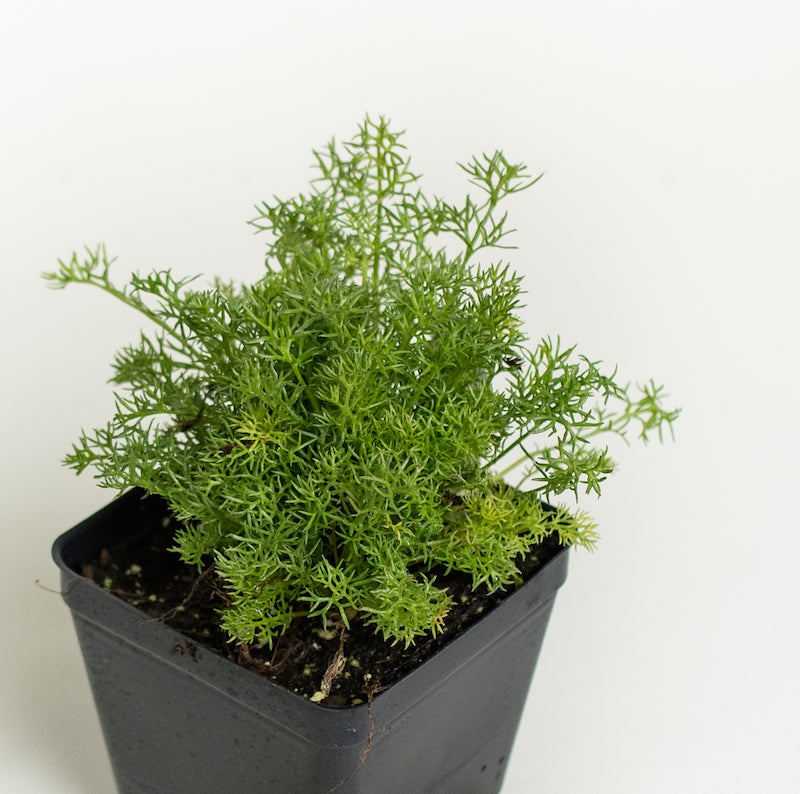
Chamomile 'German'
Chamomile 'German'



-
 Culinary
-
 Medicinal
-
 Aroma
Aroma
-
 Pollinator
-
 Drought
Couldn't load pickup availability
-
German Chamomile Plants For Sale
Matricaria Chamomila
Herb Growing Tips
Light: Full-Part Sun
Temperature: Annual
Watering: Water daily until established in it's new home, then they are drought tolerant!
Soil: Well drain soil
Comments: This plant doesn't experience much issues, great for beginners! Fun fact this plant will be a great companion plant for cucumbers, helps keep those pest away! This plant can get aphids and thrips but these pest can be easily removed with soap spray!
Herb Description
Similar to Roman Chamomile, Chamomile 'German' has been a useful medicinal herb for centuries.
Medicinally, Chamomile 'German' is a great cure for a variety of ailments ranging from nausea, headaches and anxiety, to easing colic in babies. Widely used in tea form, Chamomile 'German' is a gentle sedative and its flowers contain anti-fungal, anti-inflammatory and antibacterial properties. In Ancient Egypt, Chamomile was used as a cure for malaria.Common Chamomile
Easy and quick to grow, Chamomile can be a bit invasive to gardens if left unchecked. Proven to encourage the quality of plants grown near it as well as the condition of the garden bed and soil, Chamomile is also resistant to insects and an attractant for necessary pollinators. Though not as fragrant as Roman Chamomile, 'Common' has an apple scented, daisy-like flower and grows in a shrub-like spread. Makes a wonderfully aromatic, pest repelling ground cover!
German Chamomile is also used in many shampoos for its perfume and in hair dyes and rinses to enhance blond coloring.
German Chamomile Plants For Sale
Matricaria Chamomila
Herb Growing Tips
Light: Full-Part Sun
Temperature: Annual
Watering: Water daily until established in it's new home, then they are drought tolerant!
Soil: Well drain soil
Comments: This plant doesn't experience much issues, great for beginners! Fun fact this plant will be a great companion plant for cucumbers, helps keep those pest away! This plant can get aphids and thrips but these pest can be easily removed with soap spray!
Herb Description
Similar to Roman Chamomile, Chamomile 'German' has been a useful medicinal herb for centuries.
Medicinally, Chamomile 'German' is a great cure for a variety of ailments ranging from nausea, headaches and anxiety, to easing colic in babies. Widely used in tea form, Chamomile 'German' is a gentle sedative and its flowers contain anti-fungal, anti-inflammatory and antibacterial properties. In Ancient Egypt, Chamomile was used as a cure for malaria.
Common Chamomile
Easy and quick to grow, Chamomile can be a bit invasive to gardens if left unchecked. Proven to encourage the quality of plants grown near it as well as the condition of the garden bed and soil, Chamomile is also resistant to insects and an attractant for necessary pollinators. Though not as fragrant as Roman Chamomile, 'Common' has an apple scented, daisy-like flower and grows in a shrub-like spread. Makes a wonderfully aromatic, pest repelling ground cover!
German Chamomile is also used in many shampoos for its perfume and in hair dyes and rinses to enhance blond coloring.

What’s included
Included items will appear here once configured.